


Investigate
Turn a messy bug report into a focused investigation.
 BuggoGet started
 Buggo turns bug reports into suspects, so you and your coding agent know where to look first.
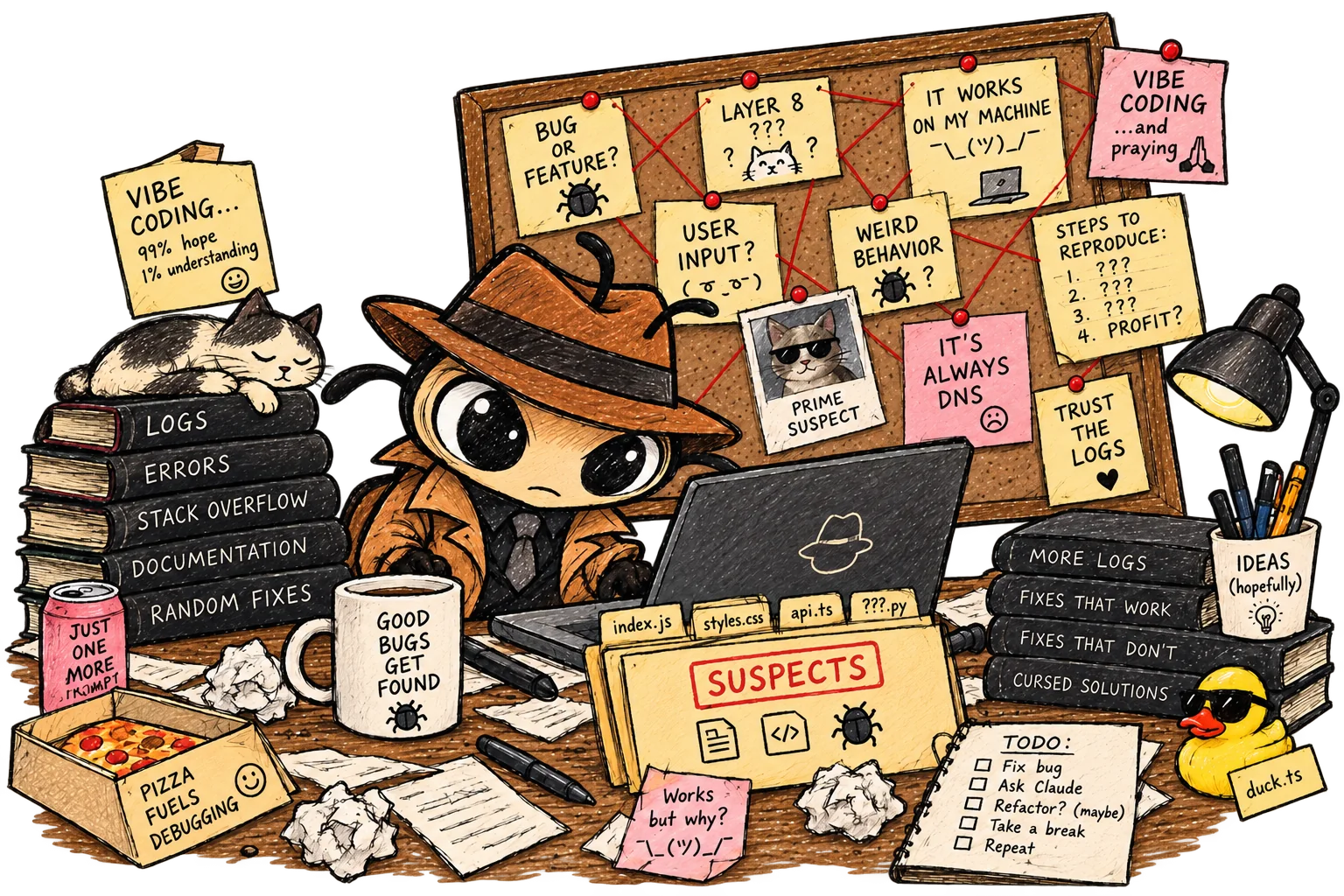
“Finally, someone who takes my bugs seriously.”
“Buggo gave me suspects. I supplied the panic.”
“Buggo found the issue in 30 seconds. I spent 3 hours blaming my coworkers.”
Turn a messy bug report into a focused investigation.
Get ranked files and the evidence behind each lead.
Give your coding agent fewer files to read first.
Use the CLI, JSON output, or the MCP server.
A little detective work goes a long way.
Buggo scans the shape of your codebase and ranks likely files from the clues in your report. You decide what to inspect and verify.
Start with what broke. Add an error, stack trace, or recent change if you have one.
Buggo points to likely files and functions with evidence for each lead.
Open the ranked files, reproduce the issue, and make the fix with a smaller search area.
The stylesheet is a suspect now, too.
Buggo follows leads across code, components, styles, and configuration.
.js .jsx .mjs .cjs .ts .tsx .mts .cts .py.astro .vue .svelte .mdx.css .scss .less .html.json .yaml .yml .tomlAlso Dockerfile, docker-compose files, .dockerignore, .npmrc, and .nvmrc.From the actual evidence drawer / BG-0001
One bug report. A repository full of possibilities. Buggo found a place to start.
The report
“The weekly DICIS schedule scraper is silently dropping all Salamanca campus courses.”
Scene scanned: 83 production files
There goes the afternoon of opening files at random.
Symbols: is_valid_room, normalize_room, should_skip_subject, format_professor, extract_days
Symbols: clean, safe_parse_time, normalize, generate_hash, subject_id
5 files recommended for investigation.
Suspects, not convictions. Buggo narrows the search. You verify the culprit.
Your next case awaits
Install the CLI, add your API key, and investigate a bug in your repository.
npm install -g @moraxh/buggo02 / configurebuggo config set-key <your-openrouter-key>03 / investigatebuggo investigate "your bug" --repo .View package